Introduction
how-to-safely-remove-tattoos-without-scarring-or-skin-damageImagine looking in the mirror and only seeing healthy, unblemished skin—no lingering ink, no telltale shadows of past designs. If removing a tattoo once meant aching sessions and doubtful results, today’s advanced methods offer hope for a clean slate without compromising your skin’s integrity. At Natural Beauty Clinic in Gangnam, Seoul, we’ve guided hundreds of patients through efficient, low-downtime removal journeys. In this article, you’ll learn why tattoos can scar, which laser technologies deliver the safest clearance, and how expert aftercare ensures your skin heals smoothly. Ready to rediscover your natural canvas? Let’s explore the science and step-by-step path to ink-free confidence.
Why Tattoos Can Leave Lasting Marks—And How We Prevent Them
why-tattoos-can-leave-lasting-marksand-how-we-prevent-themTattoo ink sits deep in the dermis, the skin’s middle layer. It’s not like a pen mark on your hand that washes off; these pigments are surrounded by collagen fibers and immune cells. When you remove ink, you’re essentially asking your body to clear out a foreign substance without triggering too much inflammation or scar tissue formation.
To use an analogy, imagine tattoo pigment as ink dripped into the mesh of a fine net. If you tug too hard to remove it, the net tears. Too gently, and ink remains tangled. Effective removal strikes a balance: break ink particles into fine pieces small enough for immune cells to gather, yet leave the surrounding “net”—your skin’s scaffolding—intact.
Key factors that influence scarring risk include:
key-factors-that-influence-scarring-risk-include:Energy type and intensity: High-intensity energy can vaporize pigment but may injure adjacent tissue if misdirected.
Pulse duration: Short pulses (in billionths of a second) target ink more precisely, reducing collateral heat damage.
Skin hydration and melanin level: Darker skin tones absorb more laser energy, so protocols must adjust to avoid burns.
Aftercare compliance: Proper wound care prevents infection and hyperpigmentation.
At Natural Beauty Clinic, our experts calibrate each session according to tattoo color, size, location, and your skin type—all certified under FDA, CE, and KFDA standards to minimize risk.
Understanding Your Removal Options
understanding-your-removal-options
Q-Switched Lasers: The Traditional Workhorse
q-switched-lasers:-the-traditional-workhorseQ-switched (Q-SW) lasers emit high-intensity pulses in the nanosecond range. They shatter ink granules by delivering a sharp acoustic shockwave.
Best for: Solid black, red, blue, and green inks.
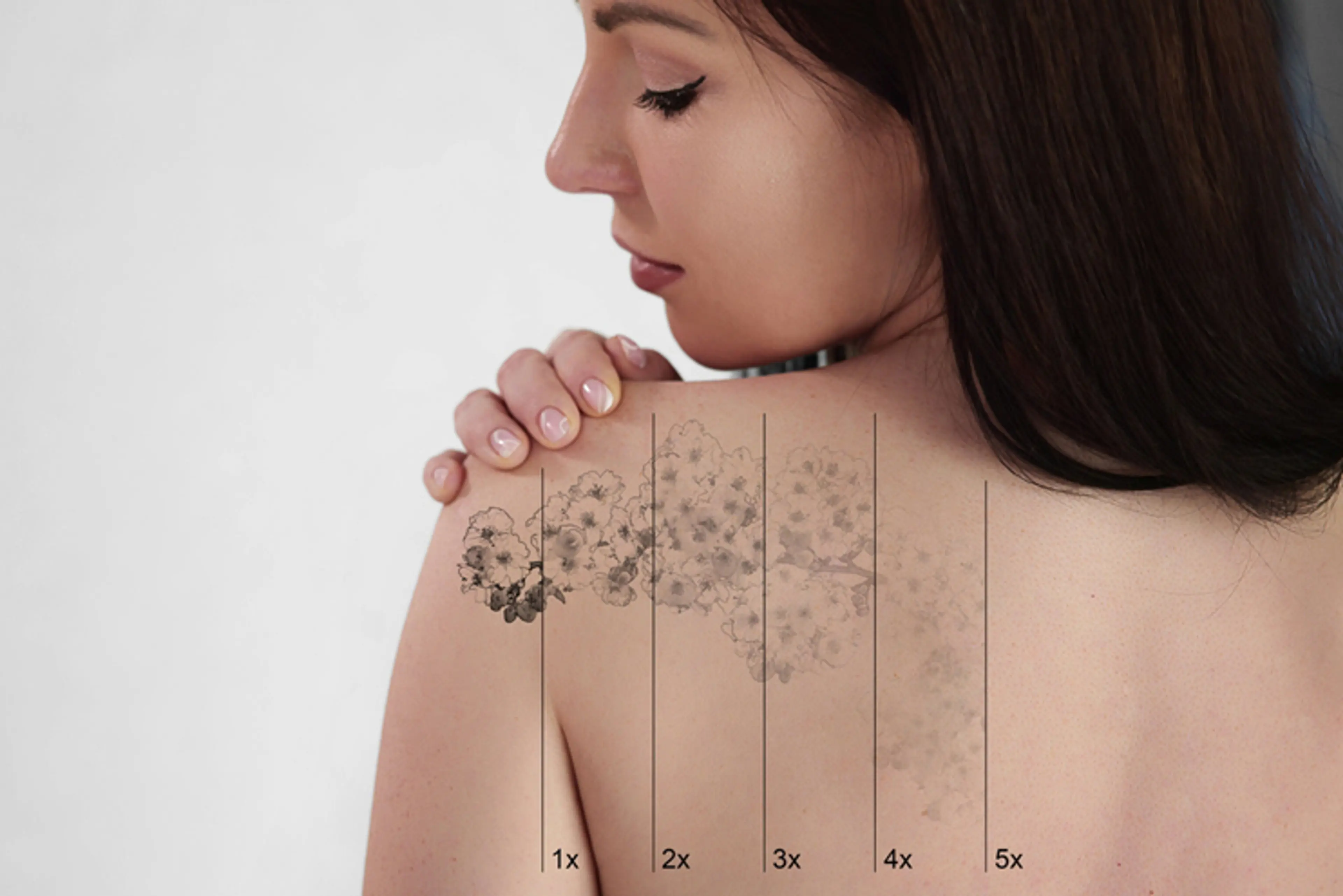
Sessions needed: Typically 6–10, spaced 6–8 weeks apart.
Downtime: Light crusting and redness for 3–5 days; minimal peeling.
PicoSure® and Picosecond Lasers: Next-Level Precision
picosure(r)-and-picosecond-lasers:-next-level-precisionPicosecond lasers operate in trillionths of a second, creating a photomechanical effect that further fragments stubborn pigments.
Advantages: Faster clearance in fewer sessions, gentler on surrounding tissue.
Ideal for: Multicolored, professional-grade tattoos.
Downtime: Comparable to Q-SW but with slightly less inflammation.
Fractional Lasers: Speeding Healing
fractional-lasers:-speeding-healingBy creating microscopic columns of laser injury around intact skin, fractional lasers accelerate repair and reduce scarring risk.
Use case: Added between pigment-targeting sessions to refresh the skin surface, especially if slight textural changes appear.
Benefit: Boosts collagen remodeling, leaving smoother results.
Non-Laser Alternatives (Limited but Worth Mentioning)
non-laser-alternatives-(limited-but-worth-mentioning)Salabrasion/Microdermabrasion: Abrasive methods that remove layers of skin. High risk of scarring; rarely recommended today.
Chemical Peels: Superficial removal; ineffective for deep ink.
Surgical Excision: Cuts out the tattooed skin, sutures the defect. Only for very small tattoos and tolerable scars.
While these methods exist, laser removal remains the gold standard for safety and skin preservation—the same choice we trust at
Natural Beauty Clinic.
Crafting Your Personalized Removal Plan
crafting-your-personalized-removal-planNo two tattoos or skin types are identical. Here’s how we usually tailor your journey:
In-Depth Consultation – We analyze ink depth and color spectrum under specialized dermascope lighting. Bringing in old tattoo consent forms or pictures can help us estimate sessions.
Test Patch – A small area receives a single pulse to gauge your skin’s reaction and optimal energy settings.
Scheduled Sessions – We recommend spacing visits 6–8 weeks apart; your immune system needs time to clear shattered particles.
Integrative Skincare – Medical-grade topical serums rich in peptides and antioxidants support skin repair.
Aftercare Protocol – From gentle cleansing to silicone-based scar gels and strict sun avoidance, every step counts.
For those with darker Asian complexions, we take extra care: lower-fluence starting settings and longer intervals prevent post-inflammatory hyperpigmentation.
What to Expect During and After Treatment?
what-to-expect-during-and-after-treatment
During your session: You’ll wear protective goggles while the laser’s tip hovers just above the skin. Most patients describe the sensation as a quick snap of a rubber band. A cooling device or chilled gel keeps discomfort to a minimum.
Immediately after: Expect redness, mild swelling, and pinpoint bleeding spots in the treated area. Tiny scabs or crusts may form within 24 hours.
Days 1–5: Keep the area clean and moisturized. Avoid scrubbing; allow scabs to fall off naturally. Sun exposure can darken healing pigment, so broad-spectrum SPF 50+ is non-negotiable.
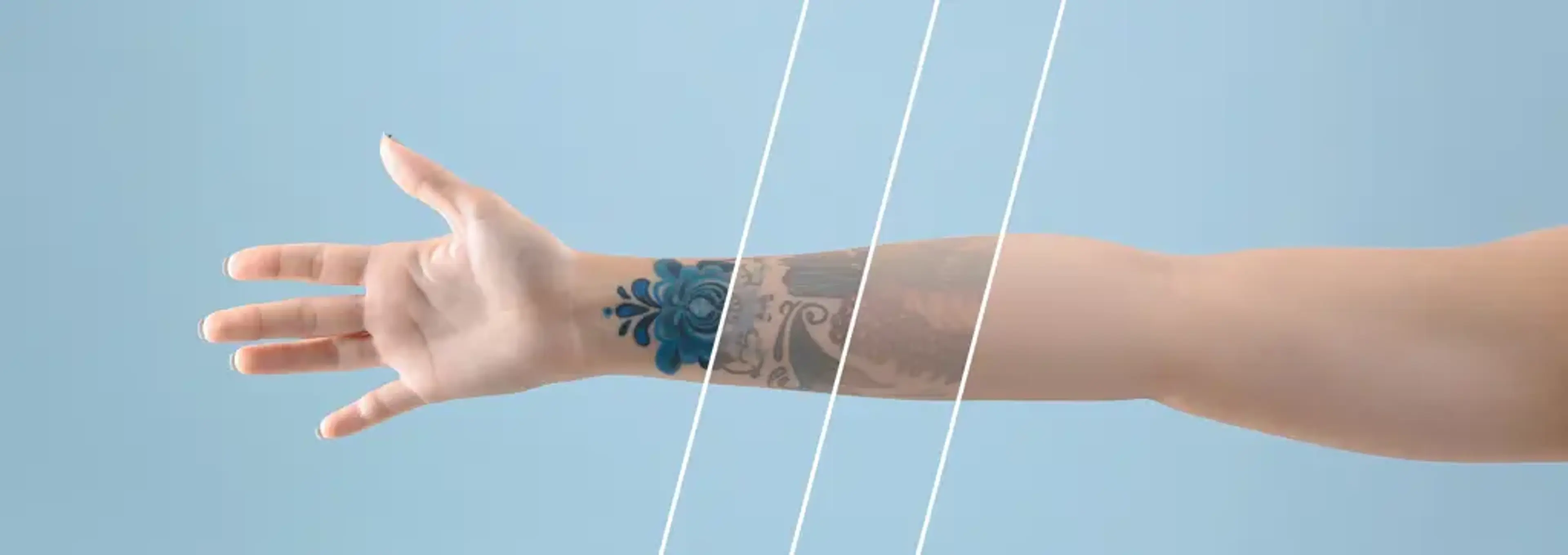
Weeks 2–6: You’ll see progressive fading as macrophages carry pigment away. Any transient blotchiness typically resolves by week six.
Patience is key—your tattoo looks lighter session by session, not overnight.
Minimizing Scarring and Maximizing Skin Health
minimizing-scarring-and-maximizing-skin-healthWhile laser science does most of the heavy lifting, your at-home care is just as crucial. Here’s our clinic’s refined post-laser regimen:
Cleanse gently with a pH-balanced, fragrance-free wash.
Hydrate with a sterile, peptide-rich ointment twice daily.
Shield with a zinc-oxide or mineral-based sunscreen every two hours if outdoors.
Soothe occasional itch with over-the-counter hydrocortisone (0.5%) for no more than three days.
Avoid saunas, heavy workouts, and chlorinated pools for one week.
Integrating antioxidants like vitamin C and niacinamide into your broader skincare routine helps fortify collagen and even out skin tone. Think of these ingredients as the daily nourishment that keeps your skin’s scaffolding sturdy while it heals.
When to Seek Expert Help?
when-to-seek-expert-helpIf you notice any of the following red flags, book an urgent follow-up:
Signs of infection: Increasing pain, yellow-green discharge, or streaking redness.
Prolonged crusting beyond two weeks.
Excessive scarring: If any area feels raised beyond a few millimeters.
These are rare when following our protocols, but prompt attention ensures any complication remains minor.
Conclusion
conclusionChoosing to erase unwanted ink isn’t just a cosmetic decision—it’s an investment in your skin’s future. By leveraging state-of-the-art laser platforms, individualized energy settings, and science-backed aftercare, Natural Beauty Clinic ensures that each session moves you closer to clear, unmarked skin without trading one imperfection for another. Remember: true success lies not only in fading pigment, but in preserving the strength and beauty of your dermal scaffolding.
If you’re ready to turn the page on an outdated tattoo, schedule a private consultation at our Gangnam clinic. Our specialist team, led by
Dr. Eun-young Lee, will build a tailored removal plan and support you through every milestone—because achieving flawless skin deserves both precision and compassion.